Brand Dominance ≠ Local AI Visibility
Maciej Czypek·Founder
January 31, 2026
We ran AI Visibility Reports on 10 iconic global brands in selected cities and neighborhoods.
The results prove that for AI Search (Answer Engines), visibility is influenced mainly by the local knowledge graph, not perceived brand dominance. This does not mean, however, that global brands are unable to compete for AI recommendations with established local companies.
The awareness that to appear in ChatGPT or Google/Gemini responses in the context of a given location (e.g., a city or neighborhood), one must position oneself in local media as an integral part of the community, operating with respect for the spirit and culture of a given place, is crucial - for both large and small brands (which also compete with each other).
Starbucks - Milan, Cordusio
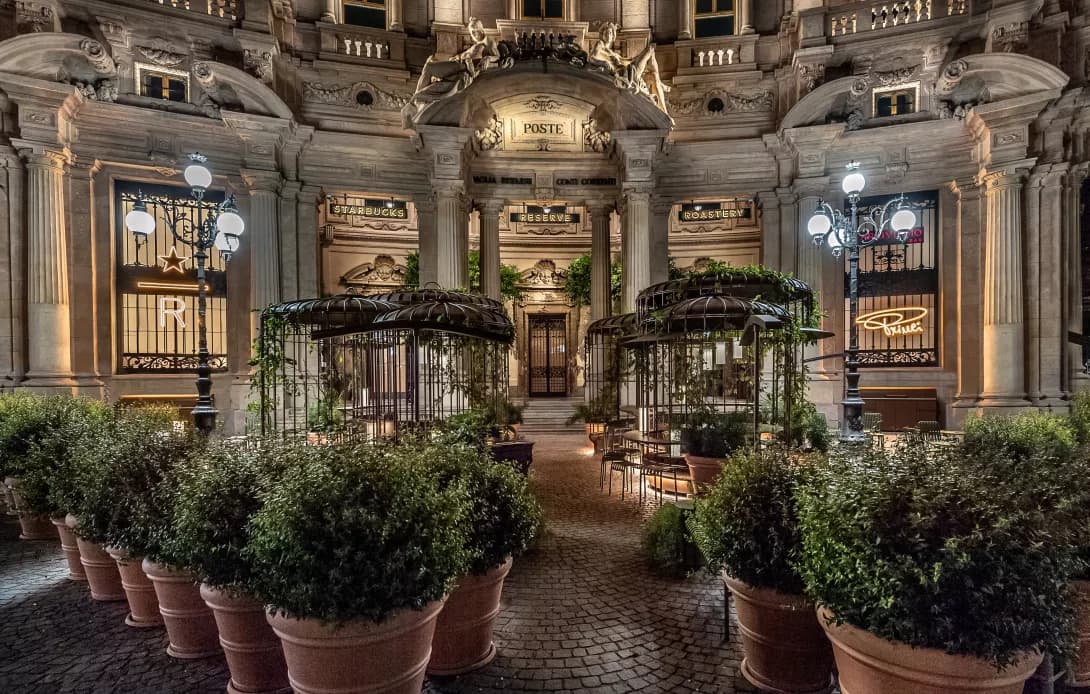
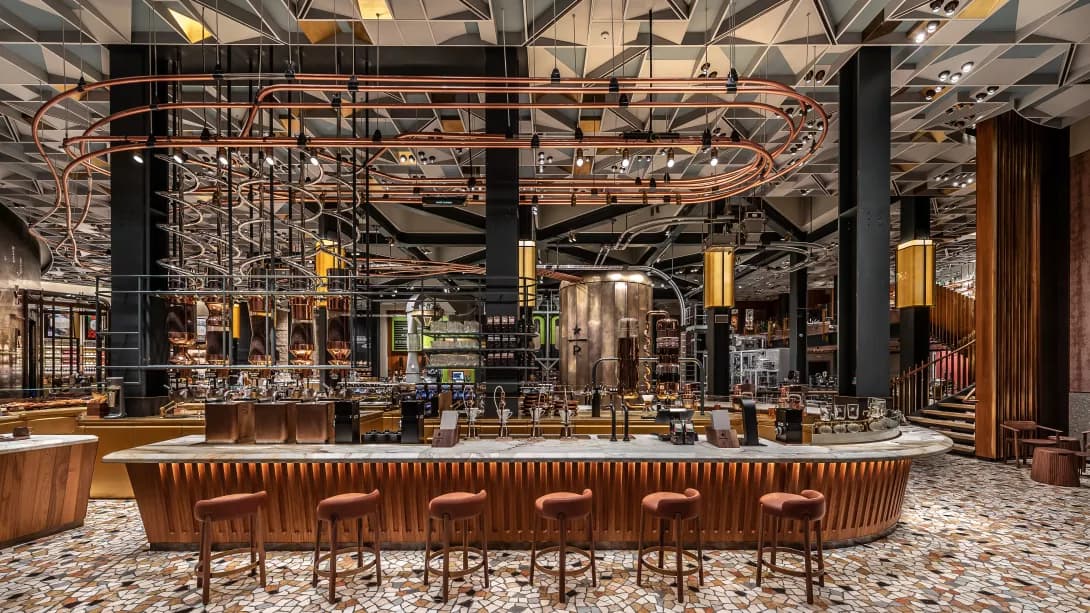
A flagship experiential venue on Piazza Cordusio. Premium 90-minute coffee tours. One of the most Instagrammed cafes in Italy.
AI visibility: 0%. Not a single mention across tested AI searches.
Who beats them? Pasticceria Marchesi (est. 1824), Camparino in Galleria (est. 1867), even tiny Orsonero Coffee.
Why? Marchesi appears via press features in My Art Guides. Camparino is featured in GCR Magazine as an iconic Milanese coffee venue with over 150 years of history. Orsonero is listed on specialty coffee directories like Go Specialty Coffee and Wanderlog.
Starbucks Reserve Roastery has no presence in Milan's local coffee guides, specialty directories, or editorial features that distinguish it from a regular Starbucks. Without that local context, AI has no reason to treat it as the unique experiential venue it actually is. The entity does not exist in the local knowledge graph.
Sephora - Paris, Le Marais
The world's largest beauty retailer, located in one of Paris' most famous shopping districts.
AI visibility: 0%. Beaten by Oh My Cream!, Diptyque, Byredo, and even Holidermie.
The difference? MAC Cosmetics appears across three Le Marais directories simultaneously: BeautyCenter.fr, SortiraParis.com, and SpaEtc.fr. Byredo has "Le Marais" explicitly in its store locator URL. Chanel's store page includes "Le Marais" in the page title.
Sephora's store page returns HTTP 403 to crawlers. AI literally cannot read it. The page that exists uses an internal store code (S5231) with zero neighborhood signals. Sephora is invisible because it is absent from the "Le Marais shopping" graph entirely.
Zara - Madrid, Salamanca
Inditex's flagship on Calle Serrano, one of Europe's most prestigious shopping streets.
AI visibility: Ranked 20th
Prada ranks #1. How? It appears in IFEMA's "Ruta de compras de lujo" guides, esmadrid.com tourism listings, and LoopNet Serrano commercial directories. Three reinforcing local sources.
Zara has only one signal: a basic esmadrid.com listing. Its store locator returns HTTP 403. The recent "El Apartamento" concept store reopening received press coverage in Cinco Días, but that editorial signal has not propagated into AI recommendations. Why? There is no local entity foundation for it to attach to.
McDonald's - Chicago, West Loop
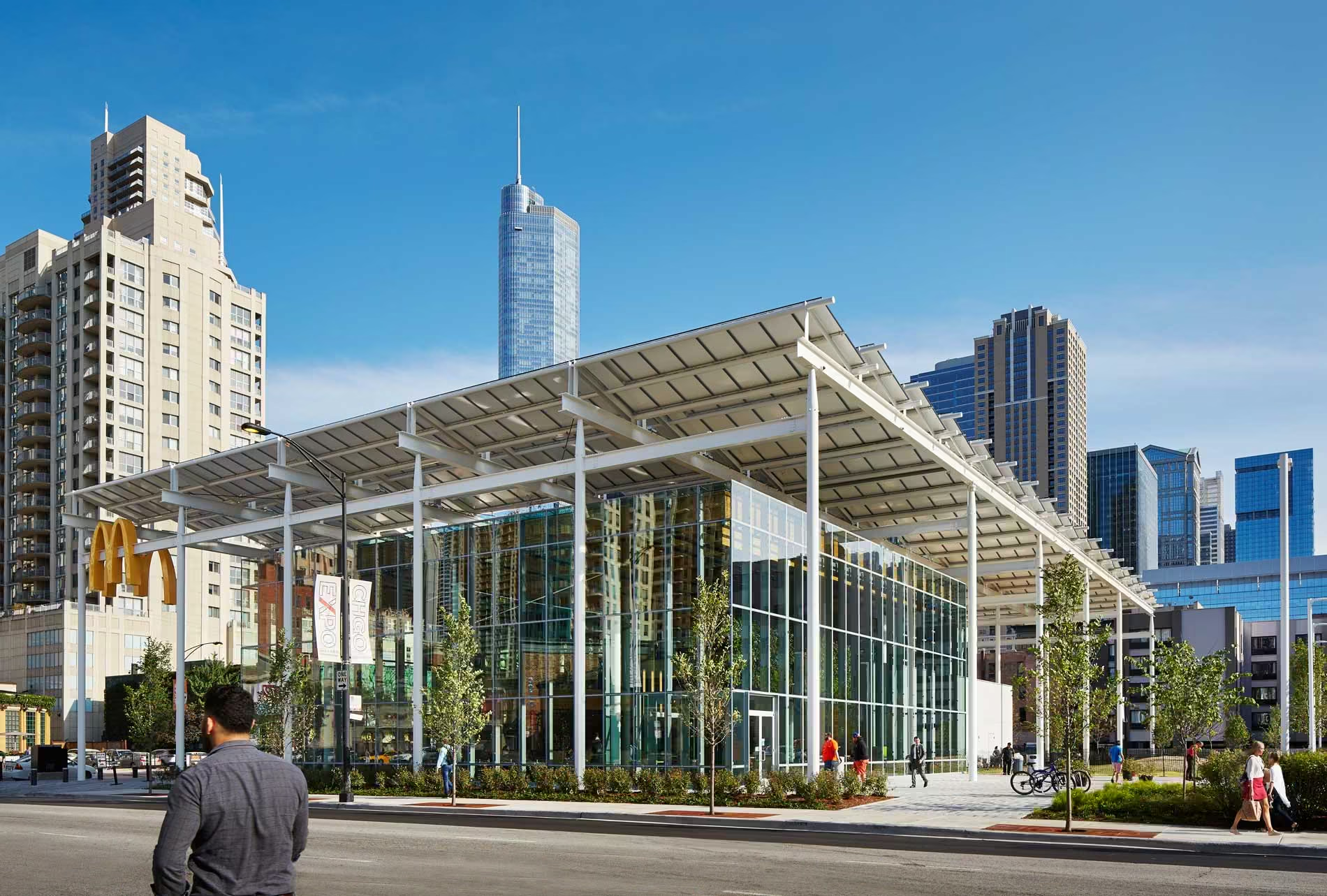
AI visibility: 20% Frequency.
The interesting part: the one prompt it appears in ("fast food near West Randolph") is powered entirely by a Time Out Chicago editorial explaining the unique international rotating menu at the HQ restaurant. That single editorial narrative is doing all the heavy lifting, proving the value of the brand's presence in the local knowledge graph.
Meanwhile, Bar Siena beats McDonald's with 8 points. How? Dedicated late-night event pages on its own site, Restaurantji aggregator presence (359 reviews, 129 photos), and OpenTable integration. Multiple local sources reinforcing the same entity.
McDonald's has no presence on Yelp, Restaurantji, or local food directories for this specific location.
Iberostar - Miami, South Beach
AI visibility: 0%. Complete absence. A beachfront hotel brand with zero mentions across family travel, romantic stays, luxury travel, and budget travel prompts.
Every competitor that appears (Four Seasons, The Setai, 1 Hotel South Beach, InterContinental) wins through intent-specific landing pages on their own sites, reinforced by OTA listings on Expedia and Momondo with complete property details.
Iberostar's problem: the parent brand "Iberostar" and the local property "Iberostar Waves Miami" are not connected in any local knowledge graph. The Miami landing page returns HTTP 403 (to our crawler). Zero local editorial coverage. Zero travel guide inclusion. The entity simply does not exist locally.
H&M - Stockholm
Headquartered in Stockholm. One of the world's largest fashion retailers.
AI visibility: 20% Frequency. Appears only for "affordable fashion", trapped in a single intent bucket.
Weekday appears in 80% of prompts. Acne Studios appears in 60%. Why? They are featured in Visit Stockholm curated shopping guides, Bibliotekstan district directories, and ModePlatsen fashion listings. Multiple editorial sources positioning them as "where to shop in Stockholm".
H&M's Visit Stockholm listing links to the homepage, not the flagship store. It is missing from Bibliotekstan. It is absent from curated "best of" guides. The brand is so big it assumed it did not need local reinforcement.
Hard Rock Cafe - Barcelona
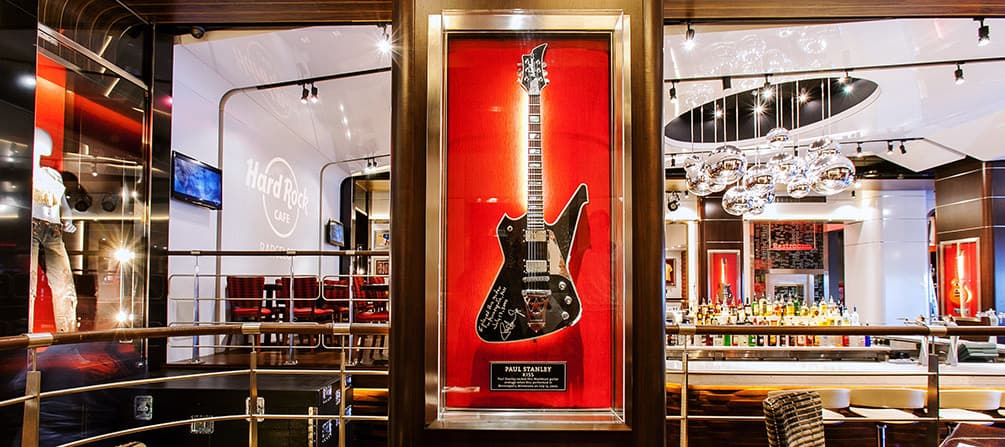
Appears in 20% of prompts, only for "American casual dining".
The paradox: Hard Rock hosts live music four times a week, is family-friendly, and sits on Plaça de Catalunya. Yet it gets zero mentions for live music venues, family restaurants, or tourist dining.
Why? Live music sessions are not submitted to Barcelona's official tourism or event calendars. There is no listing in Time Out Barcelona live-music dining guides. TripAdvisor reviews from April 2025 skew negative. Wanderlog lists it without a "live music" category tag.
Meanwhile, Disfrutar dominates with 40% visibility, powered by Michelin Guide and World's 50 Best registry entries. AI trusts official registries above everything else (95% source effectiveness).
The Pattern Across All 10 Reports
This is not about technical SEO tricks. It is about local entity reinforcement.
The brands that win in AI recommendations are not the biggest. They are the ones that exist across multiple local knowledge sources simultaneously:
- Tourism authorities - Visit Stockholm, esmadrid.com, wien.info, ParisJeTaime
- District directories - Bibliotekstan, Paris-Marais.fr, Ajuntament de Barcelona
- Local aggregators - BeautyCenter.fr, Restaurantji, Go Specialty Coffee, Rabattkompass.at
- Editorial press - Time Out, Corriere della Sera, Architectural Digest
- Official registries - Michelin Guide, IFEMA, municipal listings
When three or more of these sources reinforce the same local entity, AI recommends it. When a brand relies on its own website alone, no matter how big, it is invisible.
Add HTTP 403 crawl-blocking on top (Zara, Sephora, Iberostar, and SPAR all block AI crawlers from their location-specific store pages), and these global giants are quite literally erasing themselves from AI-powered discovery.
Brand dominance got you to where you are. Local entity reinforcement is what gets you recommended.
Every report referenced in this article is real and free to explore at aeoh.ai, where you can also quickly create an AI Visibility Report for any business in any location.
Why do big brands score so low in AI visibility?
AI systems do not recommend brands based on size or market dominance. They recommend entities that are well-represented across multiple local knowledge sources: tourism directories, district guides, editorial press, aggregators, and official registries. Most global brands rely on their own website and assume brand recognition is enough. It is not.
What is local entity reinforcement?
Local entity reinforcement means ensuring your business appears consistently across multiple independent local sources: tourism authority listings, neighborhood directories, local aggregators, editorial press, and official registries. When AI models see the same entity confirmed across three or more trusted sources, they gain confidence to recommend it.
What is HTTP 403 crawl-blocking and why does it matter?
HTTP 403 means the server rejects requests from AI crawlers, preventing them from reading your store or location pages. If AI cannot access your page, it cannot recommend you. Zara, Sephora, Iberostar, and SPAR all block AI crawlers from their location-specific store pages, effectively making themselves invisible to AI-powered discovery.
How can a global brand improve local AI visibility?
Start by ensuring AI crawlers can access your location pages (fix any HTTP 403 blocks). Then build presence across local knowledge sources: get listed in tourism authority guides, district directories, and local aggregators. Pursue editorial coverage in local press. Ensure each property has distinct listings on review platforms. The goal is to exist as a local entity, not just a global brand.
Check your business visibility in AI
Generate an AI Visibility Report and discover if ChatGPT, Google Gemini and other LLMs recommend you.
Generate Report